
Probate in the Circuit Court Clerk's Office
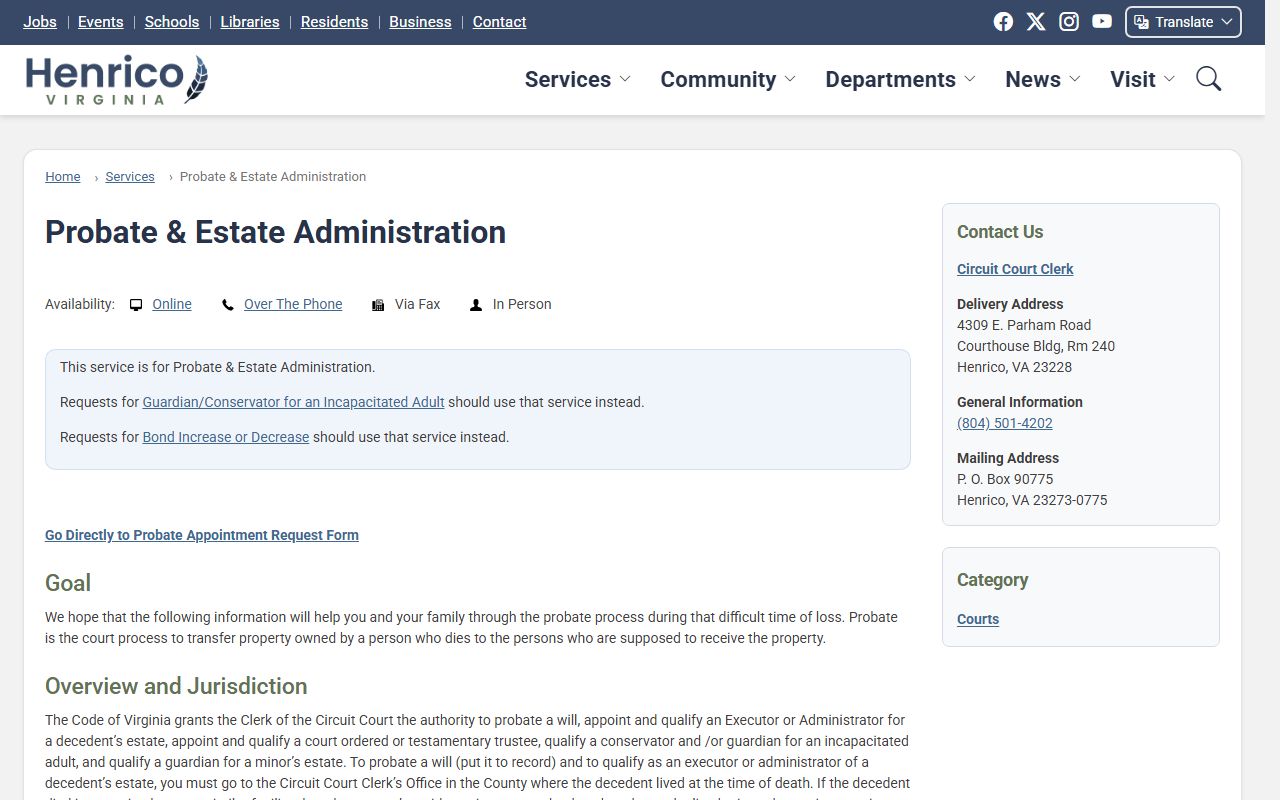
Probate in Henrico is handled by the Circuit Court Clerk, not a separate probate court. The Code of Virginia grants the Clerk authority to probate a will, appoint and qualify an executor or administrator, appoint and qualify a trustee, qualify a conservator or guardian for an incapacitated adult, and qualify a guardian for a minor's estate. The Probate Division sits on the second floor of the Courts Building, in Room 240.
Appointments usually take about an hour.
The county probate page explains the process.
The Henrico probate page covers the appointment process, the required documents, the small estate threshold, and the Commissioner of Accounts.
Because phones and electronics are prohibited in the Courts Building, print anything you need to reference and bring paper copies.
Scheduling a Probate Appointment
Probate is by appointment, not a walk-in line. You complete the Probate Request Form to set a time. The appointment usually takes about an hour, so plan your day around it. The county also asks visitors to allow about 10 extra minutes to park, pass security, and come upstairs to the Clerk's Office.
Arriving prepared keeps the appointment to a single visit.
Probate Division, Circuit Court Clerk
4309 East Parham Road, Room 240
Henrico, VA 23228
(804) 501-4202
By appointment, about one hour
Documents to Bring to Probate
The right paperwork makes the appointment go smoothly. If the person died with a will, bring the original, not a copy. You also need a certified death certificate, valid photo ID, and details about heirs and assets. Bring payment for the probate fees as well.
The checklist below follows the county's guidance.
- Confirm the person was a Henrico resident at death, or that Henrico is the proper venue.
- Complete the Probate Request Form and schedule the appointment.
- Bring the original will and codicils, plus a certified death certificate.
- Bring valid photo ID, an heir list, and approximate asset values.
- Bring payment, and witness or deposition material if the will is not self-proving.
For estates under the small-estate threshold, check whether an affidavit can replace formal qualification before you go.
Probate Terms Defined
Probate uses words that families rarely encounter elsewhere. A short glossary clears up the most common ones.
- Testator
- The person who made the will.
- Executor
- The person named in a will to administer the estate.
- Administrator
- The person appointed when there is no qualifying executor.
- Intestate
- Dying without a valid will.
- Guardian
- A person appointed to make personal-care decisions.
- Conservator
- A person appointed to make financial decisions.
Qualifying as Executor or Administrator
Qualification is the step where the Clerk formally appoints the person who will settle the estate. If a named executor cannot or will not serve, the paperwork changes. A notarized refusal letter is needed when a named executor declines, a certified death certificate when that executor has died, and a physician letter when medical incapacity prevents service.
After qualification, the work is not finished.
The Clerk gives the fiduciary instructions and the forms for the Commissioner of Accounts, who oversees the rest of the process.
The Commissioner of Accounts
The Commissioner of Accounts is an attorney appointed by the Circuit Court to oversee estate administration. After an executor or administrator qualifies, the Commissioner audits the inventory and the accountings before the estate can close. This is a real check, not a formality, and it protects heirs and creditors.
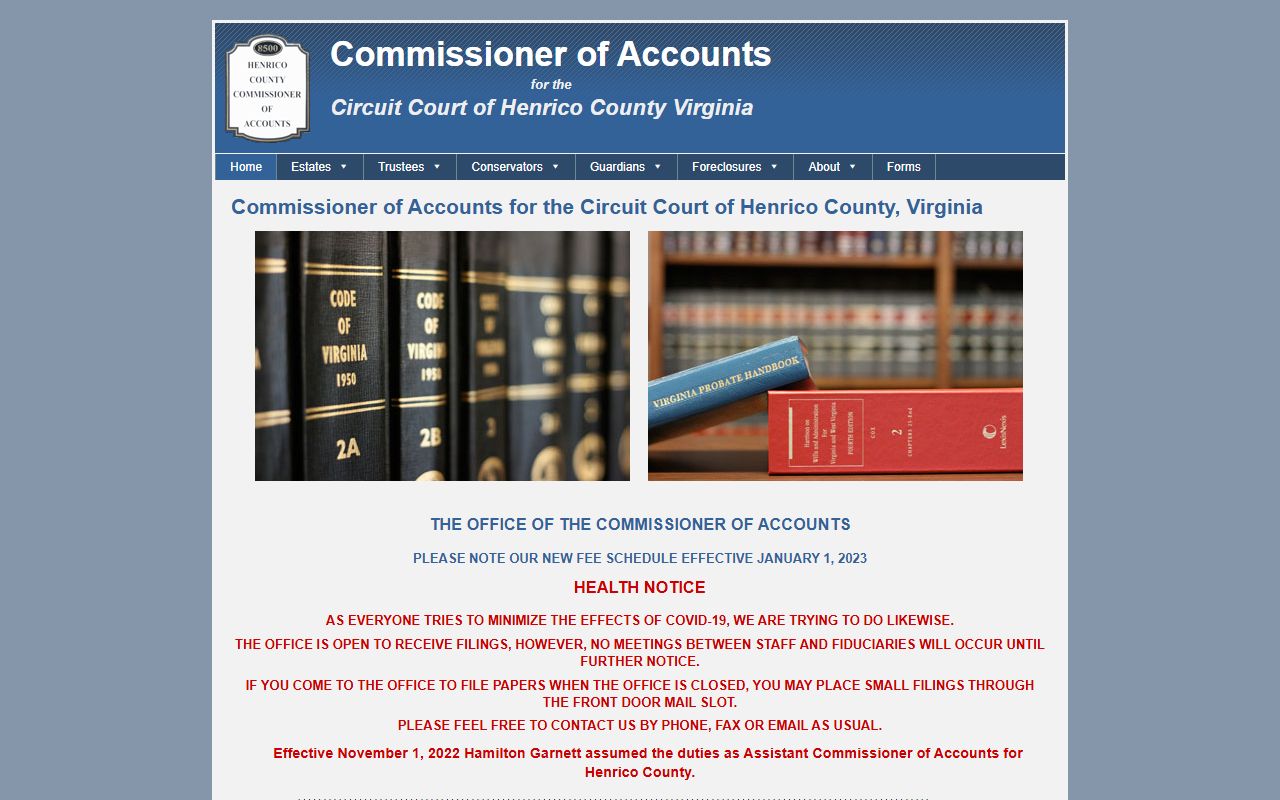
Henrico's Commissioner has his own office and website.
The Henrico Commissioner of Accounts website provides forms and guidance for fiduciaries handling an estate.
Commissioner of Accounts
Mark S. Shepard, Esq.
4114-A East Parham Road
Henrico, VA 23228
(804) 346-4700
Small Estate Affidavits
Not every estate needs full probate. Henrico states that a small estate affidavit can be used instead of probating a will and qualifying a personal representative in certain situations. The estate value as of the date of death cannot exceed $75,000. This route can save time and cost when it fits.
The affidavit process is set by statute.
The small estate rules come from two related sections.
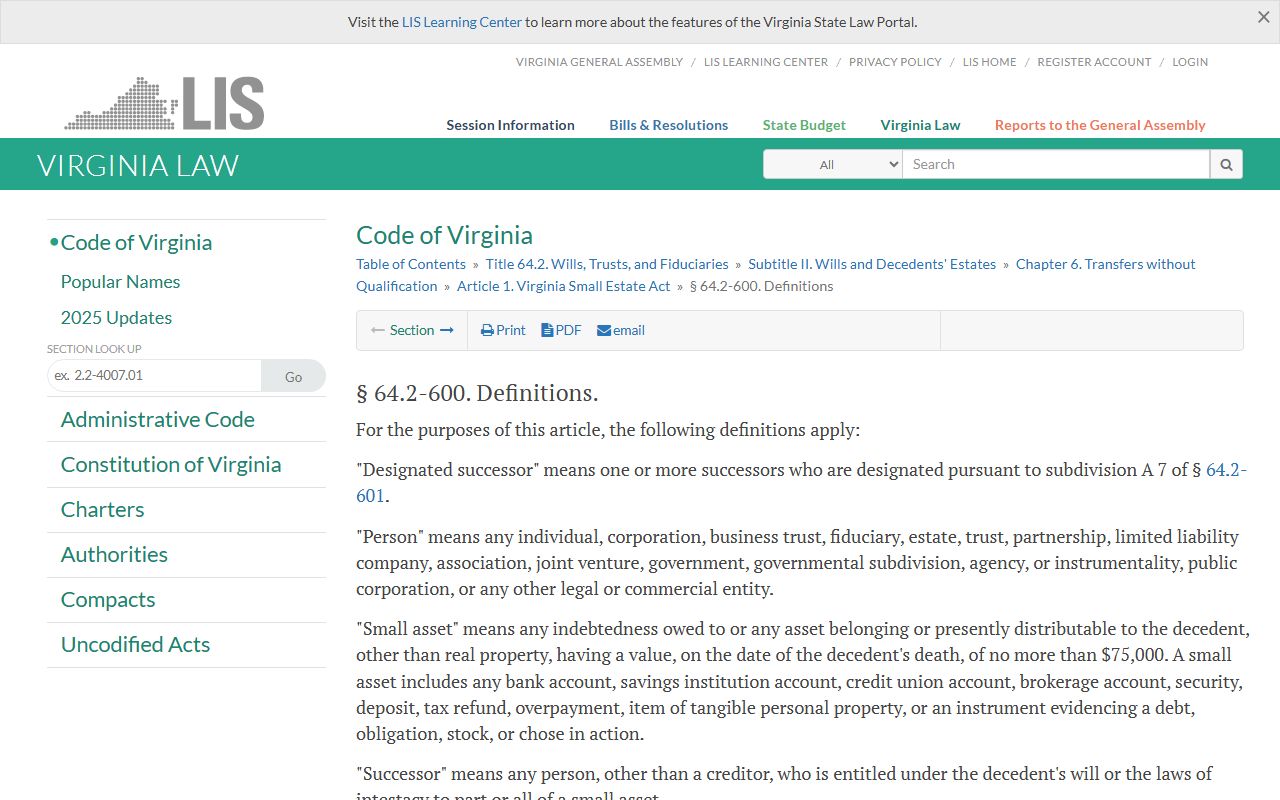
Va. Code § 64.2-600 sets the small estate affidavit, with the $75,000 value limit.
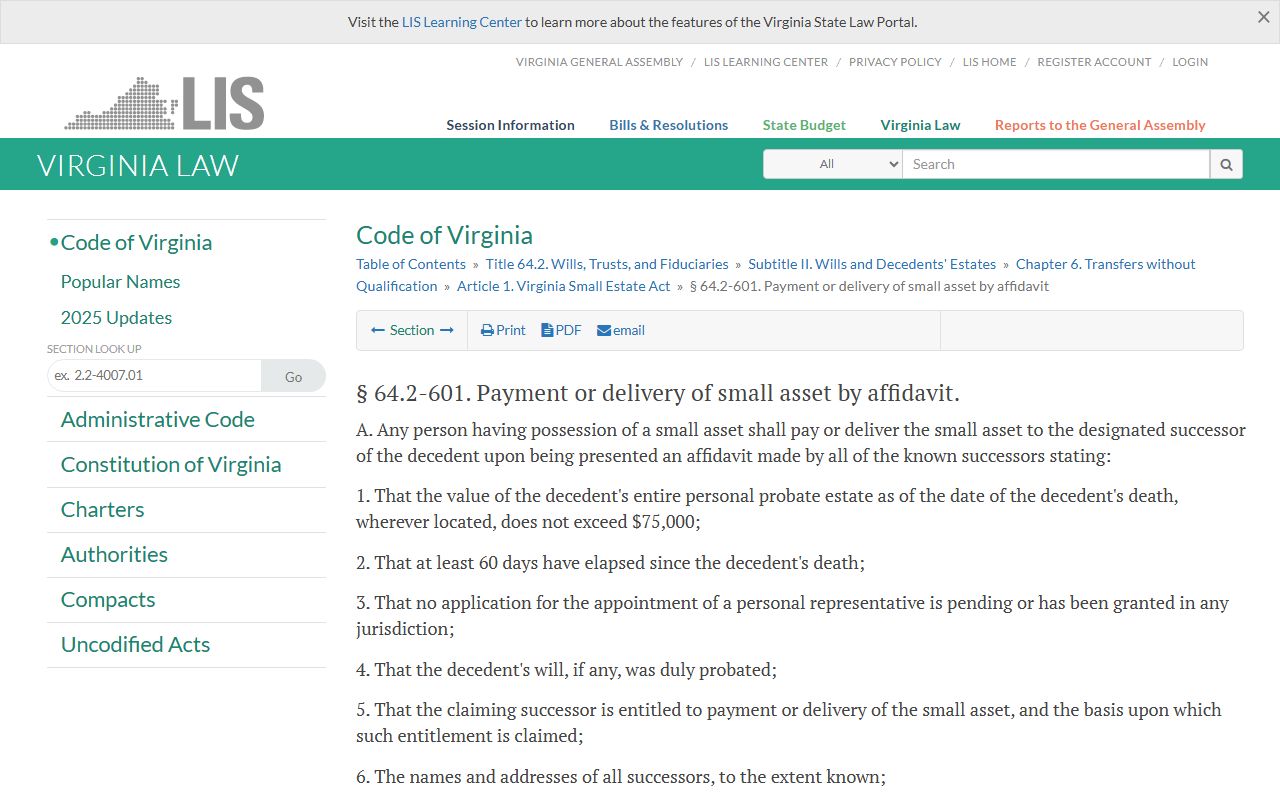
A companion section spells out the procedure.
Va. Code § 64.2-601 covers the small estate affidavit procedure.
A value at or under $75,000 does not always mean a simple estate, so waiting periods and asset types still matter. Some financial institutions also set their own requirements before they will release funds on an affidavit. Read both statutes or ask the Clerk before relying on the affidavit route.
Probate Fees
Probate fees depend on the estate value, and copy fees are separate. The Clerk accepts cash, check, debit, or credit cards for probate, with a transaction fee on credit cards. Specific probate filing fees are tied to the estate, so confirm the amount at your appointment.
| Item | Amount |
|---|---|
| Plain copy per page | $0.50 |
| Credit card transaction fee | 2% |
| Probate filing fees | Based on estate value; confirm with the Clerk |
The Circuit Court Clerk page lists the office's other fees and contacts.
Probate Tax and Asset Values
Virginia charges a probate tax tied to the value of the estate, which is why the Clerk asks for asset values up front. Bring the approximate dollar value of solely owned personal property and the fair market value of any Virginia real estate passing through probate. These figures drive the probate tax return and the fees due at qualification.
Accurate values save a return trip.
You do not need a formal appraisal for the appointment, but a reasonable, good-faith estimate of each asset helps the Clerk calculate what is owed. Joint accounts, payable-on-death assets, and life insurance with named beneficiaries often pass outside probate, so ask which assets actually count toward the estate.
Guardianship and Conservatorship
The Clerk also qualifies guardians and conservators. A guardian handles personal-care decisions for an incapacitated adult or a minor, while a conservator handles financial decisions. These appointments produce fiduciary records similar to estate filings, though medical and incapacity evidence behind them may be restricted.
Qualifying as a guardian or conservator follows a court process, and the appointed fiduciary may have to report to the Commissioner of Accounts much like an estate executor. The records of these appointments are kept by the Clerk, though the medical evidence behind them is usually sealed.
These matters often overlap with probate when an estate involves a person who cannot manage their own affairs. For the broader court framework, see the Henrico County court records page, and for related family matters, the marriage and divorce records page.